
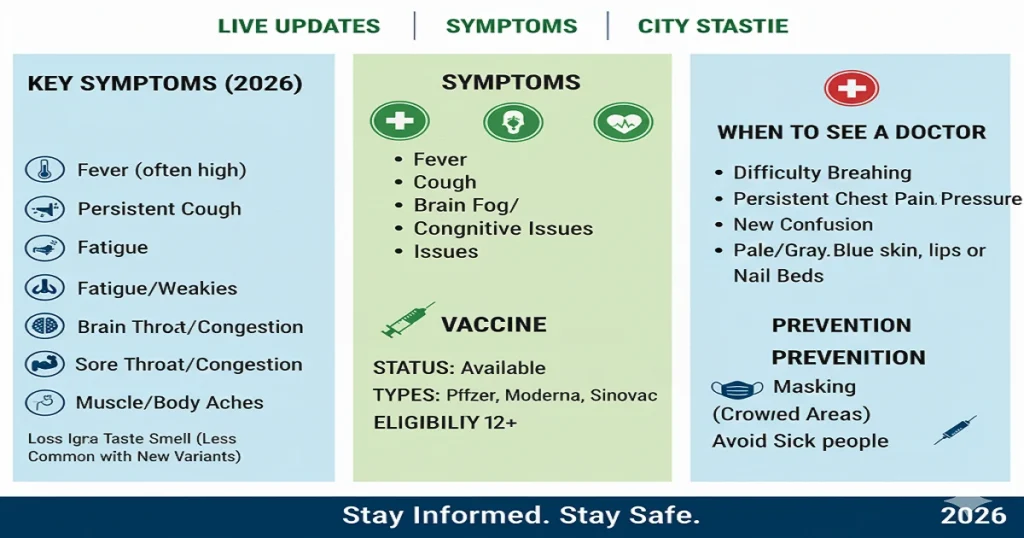
Even in 2026, COVID-19 continues to circulate in Pakistan, although its impact has evolved compared to the early pandemic years. Understanding the latest symptoms, testing options, preventive measures, and vaccination updates is crucial to stay safe and informed. This guide focuses on coronavirus symptoms in Pakistan, while also giving insights on local cases, testing, and vaccinations.
Current Situation in Pakistan (2026)
- COVID-19 is no longer causing large-scale lockdowns but continues to circulate, with periodic spikes in major cities like Karachi, Lahore, Islamabad, and Rawalpindi.
- New variants occasionally appear, but widespread vaccination and immunity from prior infections reduce severe cases.
- Health authorities monitor cases closely, providing daily updates on city-specific trends and positivity rates.
Most Common Coronavirus Symptoms in 2026
While the virus has evolved, symptoms remain largely consistent. They can appear 2–14 days after exposure and vary in intensity depending on age, health, and vaccination status.
Key Symptoms:
- Fever and chills – Often the first sign of infection.
- Persistent cough – Usually dry; may worsen at night.
- Fatigue and body aches – Can linger even after mild cases.
- Sore throat and headaches – Common early indicators.
- Loss of taste or smell – Still a major symptom in mild and moderate cases.
- Mild shortness of breath – Rare but possible in high-risk individuals.
Other Observed Symptoms in 2026:
- Gastrointestinal issues like nausea or diarrhea in some cases.
- Mild skin rashes or “COVID toes” in rare instances.
- Symptoms of long COVID: fatigue, brain fog, and difficulty concentrating lasting weeks or months post-infection.
Tip: Even vaccinated individuals can experience mild symptoms. Early detection helps reduce transmission.
How to Track COVID-19 Symptoms
- Keep a symptom diary if you feel unwell.
- Monitor fever, cough, or respiratory issues regularly.
- Use telehealth consultations for mild symptoms to reduce exposure risk.
- PCR or rapid antigen tests confirm infection when symptoms appear.
Testing for COVID-19 in Pakistan (2026)
- PCR Tests: Highly accurate; available in labs nationwide.
- Rapid Antigen Tests: Quick results; widely accessible in pharmacies and hospitals.
- Home Test Kits: Increasingly used for convenience, though less sensitive than lab tests.
Where to Get Tested: Government hospitals, private labs, and selected clinics.
Tip: Testing is recommended for anyone showing symptoms, after exposure, or before travel.
Vaccination Updates in Pakistan
Vaccination remains the best defense against severe illness:
- All WHO-approved vaccines are considered safe and effective.
- Booster doses are recommended for vulnerable groups and individuals vaccinated more than 6 months ago.
- Digital vaccine certificates can be obtained after vaccination via the official portal.
- Local health authorities also provide mobile vaccination centers in high-risk areas.
Quick Advice: Stay updated with booster schedules and avoid crowded spaces during local surges.
Preventive Measures (Even in 2026)
- Wash hands frequently with soap or use sanitizer.
- Wear masks in crowded indoor settings, especially during spikes.
- Maintain physical distance if someone near you shows symptoms.
- Monitor city-specific positivity rates for timely precautions.
FAQs About Coronavirus Symptoms in Pakistan
What are the first symptoms of COVID-19?
Early symptoms usually include fever, dry cough, fatigue, sore throat, and loss of taste or smell, appearing 2–14 days after exposure.
How long does COVID last?
Mild cases typically last 7–14 days, while moderate to severe cases may persist for 3–6 weeks; some may experience long COVID symptoms.
How to treat COVID symptoms?
Treatment focuses on rest, hydration, fever reducers, and symptom management; severe cases require hospital care or antiviral medications.
What are new COVID symptoms?
New symptoms in 2026 may include gastrointestinal issues, mild rashes, brain fog, and prolonged fatigue, especially in long COVID cases.
When did coronavirus start in Pakistan?
First reported in early 2020, spreading quickly across major cities.
Is COVID-19 still around in 2026?
Yes, it circulates as a seasonal virus, with milder effects due to vaccination.
What are the main symptoms in 2026?
Fever, cough, fatigue, sore throat, and loss of taste or smell.
Are vaccines safe?
Yes, all WHO-approved vaccines remain safe and effective.
Where can I get tested?
PCR and rapid antigen tests are available at government and private labs.
When will coronavirus end in Pakistan?
Complete eradication is unlikely. COVID-19 is expected to remain as an ongoing respiratory virus.
What is the positivity rate in Lahore/Islamabad/Rawalpindi?
Rates fluctuate; consult official health dashboards for daily updates.
Key Takeaways
- COVID-19 symptoms remain largely consistent but can vary in severity.
- Vaccination, timely testing, and preventive measures are essential.
- Early detection helps reduce spread and ensures proper medical care.
- Long COVID can affect individuals even after mild infections.
Staying informed about symptoms, testing, and vaccines in Pakistan ensures safety in 2026 and beyond. Follow official health advisories and remain vigilant, especially during local surges.
